Our Barely Kept Secret
“Somewhere along the way I lost my competitiveness and ambitions. Personal agendas began going down the drain as my interest in seeing what others would do if presented a series of options while performing from a perspective of their own design. Playing out the life of a personal history while seeking clarity and closure. All in a world which is by design, out to devour them whole.”
A Bridge of Experience
If you asked me what my best advice is when it comes to all of it. I’d say treat it as a practice, and not necessarily a skill. There is no better measure for greatness as a Story Guide than having your Players show up week after week, month after month, year after year.
The longest Story, longest lasting Table I’ve had the privilege of being the walls, floors, and doors for lasted shy of a decade, but looking back and the weight of the years piling on. I realize the persistence we had was truly remarkable.
What is Table Top Role Playing?
Gaming using old fashioned writer’s tools for group storytelling has existed since group thinking evolved for story boards. What we do when we sit down and play as a team is create wonders. Narratives we wouldn’t have otherwise achieved all ourselves. Each player taking control of the history and working against the world to make their ideal future come to pass.
The Dice are King
One of the biggest bumps to get over for a lot of new Players is understanding the value of random number generation and letting go enough of the control they have to let the variables of gameplay help dictate the bridge between them and their Story Guides. (v:X) Variables give a measured sense of stability in the game. A measure of growth in ability comes from leveling and mastering our effects, holding up the character’s growth against the dice is empowering.
I have miles of road in speech and writing on how dice are the biggest inspiration you may find at the table. They take away the guilt of playing as a Story Guide. They also ultimately give the power to the Players where power belongs. Up until the very end, the Players level 1 to 100 are the most powerful beings in your realm. All because they get to roll the dice, and The Dice are King.
Shared Fantasy
It is especially important to note, and when I’ve stepped outside my games as a Story Guide to be a Player myself, I have noticed it in many up and coming Story Guides. They feel like the fantasy is theirs and theirs alone. This doesn’t manifest in a single alleyway of ideals either. I’ll start with the solution; They don’t rely on their players enough for session preparation.
If you are a Story Guide who is meticulous about preparation. You have most every upcoming scene planned out. Every character outside your players are hand crafted and know their place in the plot. While also two sessions behind on 2 of your 5 Player’s storylines?
I digress.
Another Story Guide is one who from the beginning had an idea for everything. This one I call the puppet master. They tend to eat the floor, overshadow Player expressions, and detail events in a way it doesn’t include the people at their table as anything more than a voice actor for a character whom is already written.
I must digress again. Once more.
The Editor. Also known as the Great Gaslighter. Bless their hearts, and we are all guilty of this occasionally. Mixing up facts or keeping poor notes on player decisions, and then instead of trusting their Players in the shared fantasy, they rewrite history to suite their current understanding of the game.
Alright, last Digression.
We all have Players at our tables who are guilty of these same Archetypes. Throughout my time I have filled every single pair of shoes I laid out. Many of the times, as I’ve judged and thought of others as these things it was in the spirit of hypocrisy, and self reflection.
Oh, That was the last Digression.
Point here is when we build our table, invite our friends and strangers to sit down, be social, and brew up a brainstorm which makes the universe in the box we call our table. We’re sharing our delusions here. This is our Shared Fantasy.
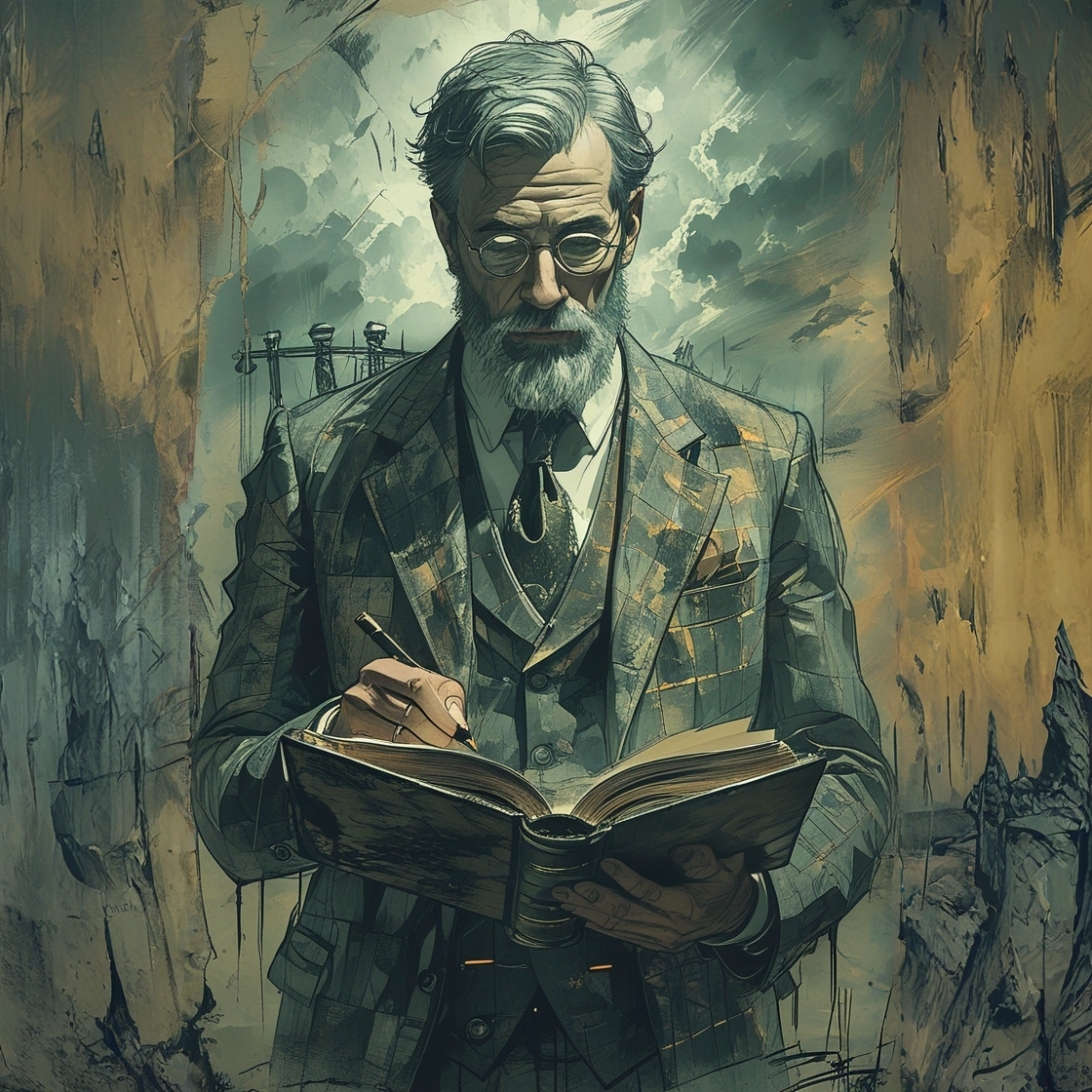
This marks my first entry here, in my Book of Mysteries. It is journaling at its finest. To start, I’ll tell you a little bit about the man behind the tree. I have had the honor to be a Story Guide for over Twenty-Five years. Recently I’ve turned over a new table, switching from conventional playing with hand drawn maps on graph paper, a fancy hexagon play mat, and enough hard-covered books to pay more than a few months’ rent. I am an aspiring game designer and narrative writer, and Midnight in Vaia is my brainchild whose nearly twenty years in the making.
The Dream is to make it into a fully functional Table Top Campaign Setting, along with its own functioning system turning the gears of roleplay.
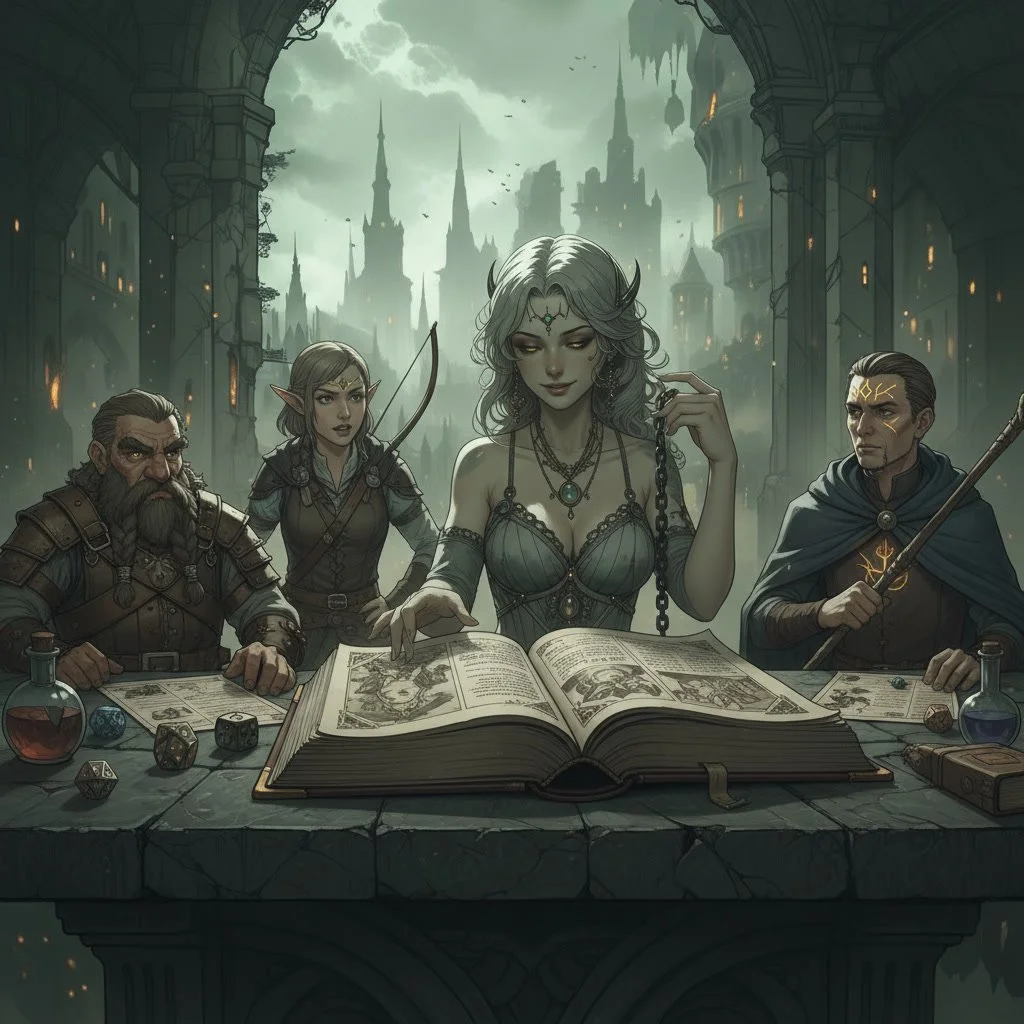
Alter Rina confidently points out the rules to the new players at her table. Making sure everyone understands exactly what is going on in their shared fantasy.
The Tightrope
Of the thousands of play styles we can use as our plot devices, the Tightrope has its place. We need to move the game along, get a Player or Players from point A to point B without many detours. The Tightrope is the solution, and I’ll throw in a couple of tips to show you how to make it work.
Overwhelming Narrative: We need them to walk the carefully laid lines. Our best strategy is to make much ado about nothing. Long winded descriptions which point out only one thing to hype a single laid out decision. Yes, Please.
Pros
Lots of world building may be achieved while keeping the Player walking the Rope.
Foreshadowing opportunities, and quickly rewarding precise action to narrative, leads to high Player satisfaction.
Cons
Without a fine touch, the extra details may derail the Player without a strong call to action.
Overwhelming Narrative requires really knowing your locations and supporting characters well enough to be both improvisational and accurate.
One Liner Breadcrumbs: You give the Player one option, with no additional detail.
Pros
During a Tightrope, we can breadcrumb responses to get the Player taking one step at a time in guided narrative.
This quick engaging pace, even without options, makes for fast gameplay and reaction time.
Leans toward making the Player to run the narrative.
Cons
Players get hung up on actions they don’t want to take.
Constant Breadcrumbing on one liners can feel like bullying the story and push outcomes to less than favorable turnovers.
One Liner Breadcrumbs can generate the feeling of the Story Guide being ill-prepared for the session.
We’ll visit Tightrope Roleplaying many times. This time we threw down the obvious. Maybe next time we’ll talk about Exploring the Tunnel, or Open World gameplay.
What did you find? You Rolled? Ah, Alright
One of the most difficult to let go opportunities I find is when the King (dice) decide an important piece of information is simply going to be out of reach for a player, possibly forever. Believe me, if you are reading this as a Player or Story Guide just starting out. I’m on the edge of my seat wanting to say the truth, slap down the blurb, and let them believe there might have been more.
Well, the truth is after I’ve played these moments out hundreds of thousands of times,
The game is better when they can’t know until they discover it later on, and get to enjoy the ‘Aha!’ moment. It makes designing around failures and gaps of knowledge simply wonderful. These Dice know their Plot Devices.
The Common Debate: Altera
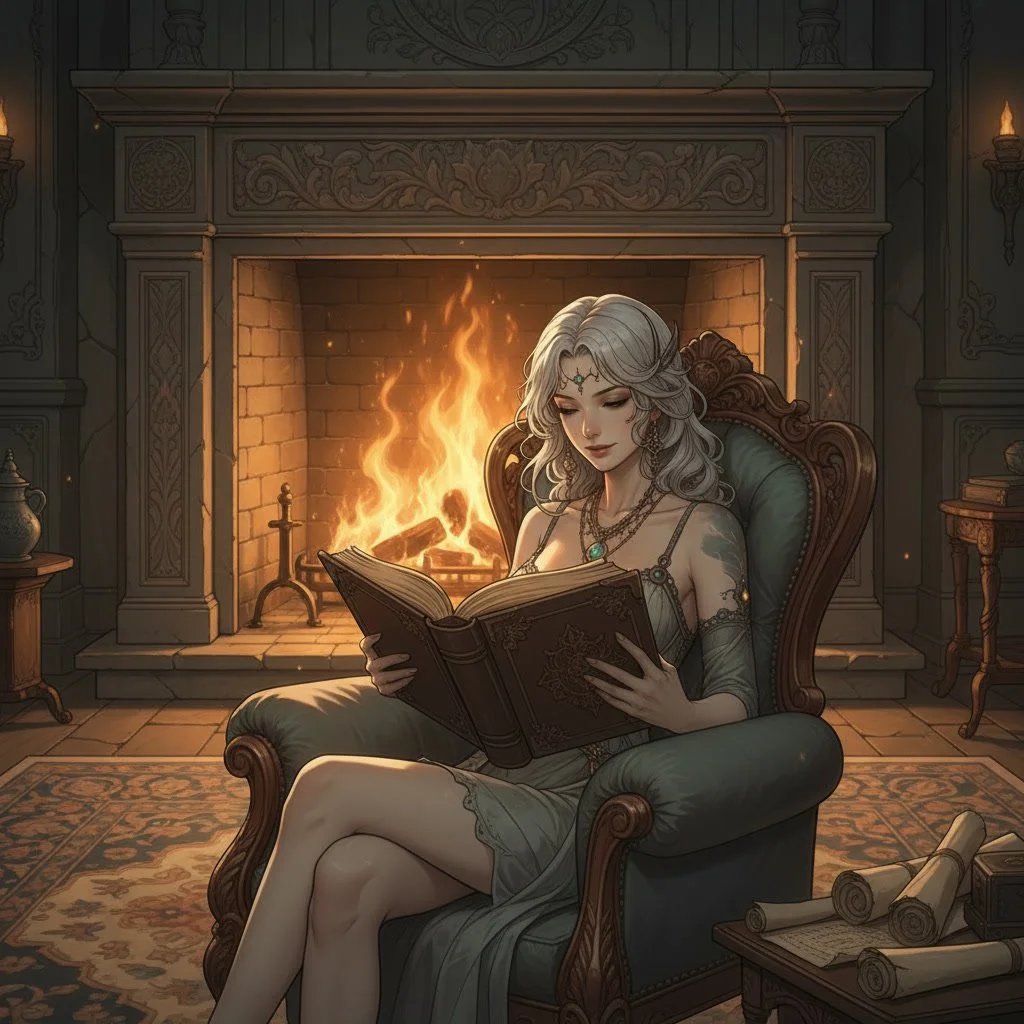
Many of the household conversations revolving around the mysterious disappearance of Altera Rina is a bickering stalemate about how people see her. Was she a prophet? A Deity walking among men? A true Goddess? Many think she was just a charitable aristocrat whom The Emperor loved, and her softening of the man is the only reason the Empire of Vaia has survived all these years.
Of these few suggestions, there are many more. Authors and historians have written a great deal on her life and impact on the world we live in. There is no denying the provisions, sanctuary, and education the Faction who banners her name in nearly every district make the the differences which keep people off the streets and set them up to be contributing members of our society.